Is Your Garage Door Ready for Long Island’s Storm Season? 4 Essential Prep Steps
Is Your Garage Door Ready for Long Island’s Storm Season? 4 Essential Prep Steps
Between heavy coastal rain, high winds, and freezing winter coastal blasts, Long Island homes take a beating throughout the year. While we often prepare our roofs, gutters, and yards for severe weather, one critical area is frequently overlooked: the garage door.
As the largest moving component in your house, your garage door acts as a primary barrier against wind, rain, and cold air. If your door is compromised by loose hardware, worn rubber seals, or unbalanced springs, severe weather can cause structural damage or leave your home vulnerable to water intrusion.
Here are 4 simple, practical steps every Long Island homeowner should take to get their garage door storm-ready.
1. Inspect and Replace Deteriorated Weatherstripping
Over time, constant exposure to salt air and changing temperatures causes bottom rubber seals and perimeter vinyl weatherstripping to crack, warp, or shrink.
- The Test: Close your garage door completely during the day and turn off the internal garage light. If you see light shining through around the edges or along the bottom seal, water and wind-driven rain can easily get in.
- The Fix: Replacing worn weather seals keeps rainwater out, prevents pests from entering, and helps maintain energy efficiency in attached garages.
2. Check Cable and Track Alignment for High-Wind Resistance
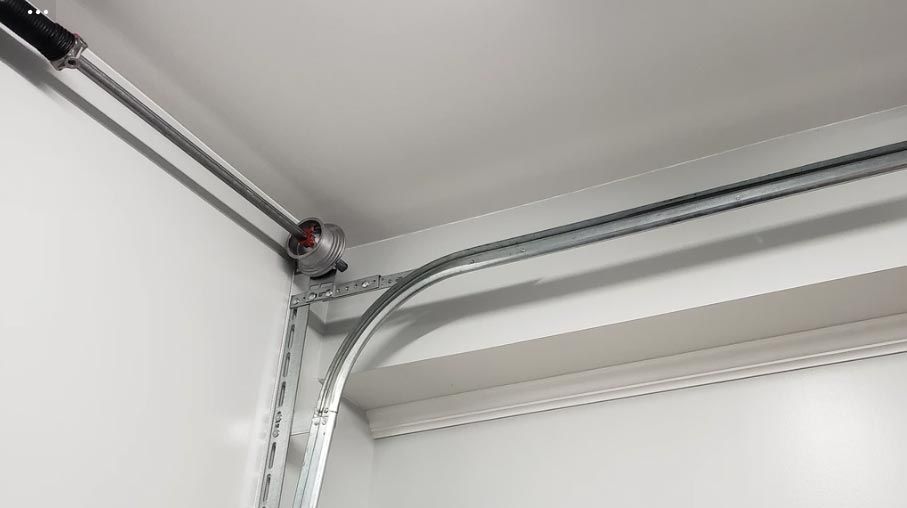
During severe storms, strong wind pressure pushes directly against your garage door panels. If your tracks are loose or misaligned, that extra pressure can dislodge the door rollers from the tracks.
- Look closely at the vertical tracks on both sides of the door. Are all mounting brackets firmly anchored to the framing?
- Inspect the lift cables along the side drums. If you notice fraying, rusting, or slacking, the cable is at high risk of snapping under heavy load or wind stress.
3. Test the Auto-Reverse and Backup Power Features
Power outages are common on Long Island when heavy storms hit. If severe weather approaches, you need to ensure you can open and close your door safely:
- Test the Battery Backup: Modern garage door openers often feature integrated battery backups. Unplug your opener unit from the wall outlet and press the remote to ensure the battery operates the motor smoothly.
- Check the Auto-Reverse: Place a small wooden block (like a 2x4) flat on the driveway under the path of the door. Lower the door. As soon as it touches the block, it should immediately reverse direction. If it doesn't, the force settings need adjustment.
4. Perform a Spring Balance Test
Your garage door’s torsion springs do the heavy lifting—not the motor. If a spring is fatigued, the opener motor has to work twice as hard to keep the door shut against wind drafts or lift it during an emergency.
- How to test balance: Disconnect the opener by pulling the red manual release cord. Manually lift the door halfway up and let go.
- The Result: A properly balanced door will stay suspended in place. If it slams down or shoots upward, your springs are out of balance and require professional torque adjustment.
⚠️ Safety Note: Torsion springs store high mechanical tension. Never attempt to adjust, tighten, or replace torsion springs or bottom lift brackets yourself.
Need Your Door Inspected Before the Next Storm?
Taking 15 minutes to inspect your overhead door system can save you hundreds of dollars in storm repairs and emergency callouts. If you notice loose hardware, frayed cables, or loud grinding noises, it's best to have an expert take a look before the next major storm hits.
Professional Garage Door Care You Can Count On
Whether you need routine preventive maintenance, a complete spring replacement, or a high-wind rated garage door upgrade, local professionals are standing by across Long Island to ensure your home stays safe, dry, and secure.