Quick Answer
Are insulated garage doors worth it? Usually, yes: they can help keep temperatures steadier when your garage is attached, has a room above or beside it, or serves as a workspace. For a detached, unheated garage used only for parking, the extra cost may bring less value.
Not sure which fits your home? Call Joe's Garage Doors at (631) 320-5465 for a free quote with upfront pricing.
Choosing a new garage door means more than picking a color. You also need to decide whether to pay for insulation. The right choice depends on how you use your garage, which rooms are next to it, and what needs fixing now.
Joe's Garage Doors is locally owned and has served Long Island since 2004. Our team brings more than 20 years of local service to each recommendation. We help you compare the door, its parts, and the full installed price before you choose.
Fall gives you time to plan before winter arrives. Whether you need a basic replacement or garage door installation on Long Island with better comfort in mind, start with your garage's needs.
What Is an Insulated Garage Door?
An insulated door has a layer of foam behind its outer steel skin. Some models have a second steel skin on the inside, with the foam held between the two layers.
Insulated sectional garage doors have separate panels that move along tracks. The foam helps slow heat moving through those panels. It does not heat or cool the garage on its own.
Two common foam types are polystyrene and polyurethane. HomeServe says polyurethane is denser and generally offers better insulation and noise control, at a higher cost. Polystyrene is often the lower-cost choice.
R-value measures resistance to heat flow; a higher number means more resistance. Gaps, panel joints, and worn seals also affect how the door works in your garage.
Ask whether a listed rating covers a panel or the whole door. DASMA, the garage door makers' trade group, explains that a panel R-value does not measure the full door system.
Do Insulated Garage Doors Really Make a Difference?
Yes, they can improve comfort, but the change depends on the rest of your garage. A sealed door with insulated panels can slow heat flow through a large opening.
That can make time at a workbench or in a home gym more pleasant. It may also help reduce temperature swings, though an unheated garage can still get very cold. Follow storage labels for paint, drinks, and other items that need a set temperature.
Noise is another reason to compare models. Manufacturers say foam-filled panels can reduce street noise and make the door feel more solid. Results depend on the door's design, seals, and hardware; insulation will not fix worn rollers or a noisy opener.
Manufacturers also say some bonded, insulated panels offer added stiffness and dent resistance. Treat that as a product claim to check, rather than a promise that every insulated door is stronger.
Energy savings are harder to predict. Walls, ceilings, air leaks, and how often you open the door all matter. We do not promise a set drop in your utility bills.
Insulated vs. Non-Insulated Garage Doors: Side-by-Side
The main difference is the foam layer. For a fair comparison, also check the steel, seals, hardware, and installation included with each door.
| Feature | Non-insulated door | Insulated door |
|---|---|---|
| Temperature | Less resistance to heat flow | More resistance through the panels |
| Noise | Less sound control from the panels | May reduce noise; design and seals matter |
| Dent resistance | Depends on steel and panel design | Some makers claim added strength; check the model |
| Weight and springs | Springs must match the door | May be heavier; springs must match its weight |
| Upfront cost | Often lower for a similar door | Often higher for a similar door |
| Long-term comfort | May suit a parking-only garage | May suit a garage you use often |
| Best for | Basic parking and a smaller budget | Attached garages and work areas |
Are Insulated Garage Doors Worth It on Long Island?
They are most worth considering when the garage affects your daily comfort. Look at what you use it for and which rooms share a wall or ceiling with it.
An upgrade is worth pricing if:
- Your garage is attached. Compare the door along with seals and insulation where the garage meets the house.
- A room sits above or beside it. If that room feels cold or hot, check the shared wall or ceiling too. A new door may be only part of the fix.
- You spend time inside. A workshop or gym gives you more chances to notice the comfort benefit.
- You store items that dislike temperature swings. Door insulation may help, but it cannot keep items within a safe range by itself.
- Street noise bothers you. Ask about sound control for the full door, including its seals.
- You are replacing a worn door anyway. Compare basic and insulated quotes before choosing the new door.
Long Island's cold winters and hot summers make comfort worth discussing. Near the coast, salt air and wind also call for care with finishes, hardware, and installation.
Insulation alone does not stop rust or prove a door can handle a storm. Ask about weather protection and wind performance as separate features.
When Can You Skip Insulation?
You may be fine without it if your garage is detached, unheated, and used only for parking. A sound basic steel door can meet that need without paying for features you rarely use.
The benefit can also be limited when the walls and ceiling lack insulation. The U.S. Department of Energy explains that insulation and air sealing work together. A better door cannot fix every route that heat and air take through the building.
If your current door is fairly new and works well, start by checking its seals and hardware. Replacing a sound door just for insulation may be hard to justify on a tight budget.
The pros and cons are simple:
- Pros: Better resistance to heat flow and possible gains in comfort and noise control.
- Cons: A higher price, possible added weight, and less benefit if the rest of the garage remains drafty.
How Much Do Insulated Garage Doors Cost?
The HomeServe cost guide lists the following installed price ranges, citing HomeGuide. These are third-party estimates, not Joe's prices or a promise of what a Long Island job will cost.
The ranges cover a new door and installation. They do not show the extra charge for choosing insulation over a similar basic door.
The same guide offers broad R-value ranges for shoppers. Use them as a starting point, rather than a rule for every home or a rating for any Joe's door series.
| Category | HomeServe estimate or guide | What it means for you |
|---|---|---|
| Installed single-car insulated door | About 750–1,900 | Third-party installed price range |
| Installed two-car insulated door | About 1,500–3,700 | Third-party installed price range |
| R-value: moderate climates | R-8 to R-13 | General shopping guidance |
| R-value: very hot or cold climates | R-14 to R-18 | Compare for stronger temperature control |
| R-value: highest efficiency goals | R-19 and above | Consider as part of a fully planned space |
Your quote depends on the door design, finish, windows, hardware, labor, and work needed at the opening. Ask for basic and insulated quotes with similar features so you can compare the added cost fairly.
Joe's gives you an exact price in writing before any work begins. Our team will recommend an R-value based on how you use your garage and explain the rating for the door you choose.
If you heat the garage, check the walls, ceiling, and seals before paying for the highest rating. Even a high-rated door cannot control the garage temperature by itself.
Is It Worth It for Your Home? Quick Scorecard
This scorecard helps you decide whether to request an insulated-door quote. It is a planning guide, not a tested savings formula or a guarantee.
| Question | If yes, add |
|---|---|
| Is your garage attached? | +3 |
| Is there a bedroom or living space above or beside it? | +3 |
| Do you use it as a workspace, gym, or for temperature-sensitive storage? | +2 |
| Is your current door thin, drafty, or noisy? | +1 |
| Are you replacing a dented or worn door anyway? | +2 |
| Is the garage detached and used only for parking? | -2 |
| Are the garage walls and ceiling uninsulated? | -1 |
Count each row once. If your total falls below zero, use zero.
- 0–2: A basic steel door may meet your current needs.
- 3–5: Insulation is worth pricing alongside a basic option.
- 6 or more: An insulated option is likely worth a closer look.
A high score shows more reasons to compare doors. It does not prove the most costly model is best, and a noisy door may still need a repair first.
What Makes the Best Insulated Garage Doors for Long Island?
The best choice fits your garage, budget, and comfort needs. The R-value should not be the only reason you pick a door.
Compare these features:
- Steel construction: Ask how the panels are built and what the inner layer adds.
- Foam type: Check the insulation used in the exact model you are pricing.
- Joints and seals: Look at how the panels meet and how the door seals at the sides, top, and floor.
- Matched parts: Springs, tracks, and hardware must suit the door's weight and design.
- Proper installation: A good fit and balance check matter as much as the product choice.
For insulated steel garage doors, ask for the written product details. If a whole-door U-factor is available, it can help you compare heat flow through the full system; lower is better.
Also ask what the written warranty covers. You should know which terms apply to the door, parts, and installation before work starts.
What Door Options Does Joe's Garage Doors Offer?
Joe's offers Bronze, Gold, Platinum, and Custom residential doors. Compare the construction and finish of each option, then confirm the exact insulation details in your quote.
| Series | Construction | Best for |
|---|---|---|
| Bronze | Nominal 24-gauge steel with a 2-inch frame | Homeowners comparing a basic steel design |
| Gold | Same steel as Bronze, with full polystyrene insulation sealed inside | Homeowners who want a foam-insulated option |
| Platinum | Steel-insulation-steel layers with tongue-and-groove joints; short, long, or flush panels | Homeowners comparing a three-layer door |
| Custom | Finish choices, natural wood stains, glass inserts, windows, and trim | Homeowners who want a style matched to their home |
For insulated garage doors with windows, ask about the glass and its effect on the full door's performance. Window area, glass type, and seals can change how a door controls heat.
Ask for the insulation type and rating in your written quote so you can compare the actual doors being offered.
How Do Insulated Doors Affect Springs and Openers?
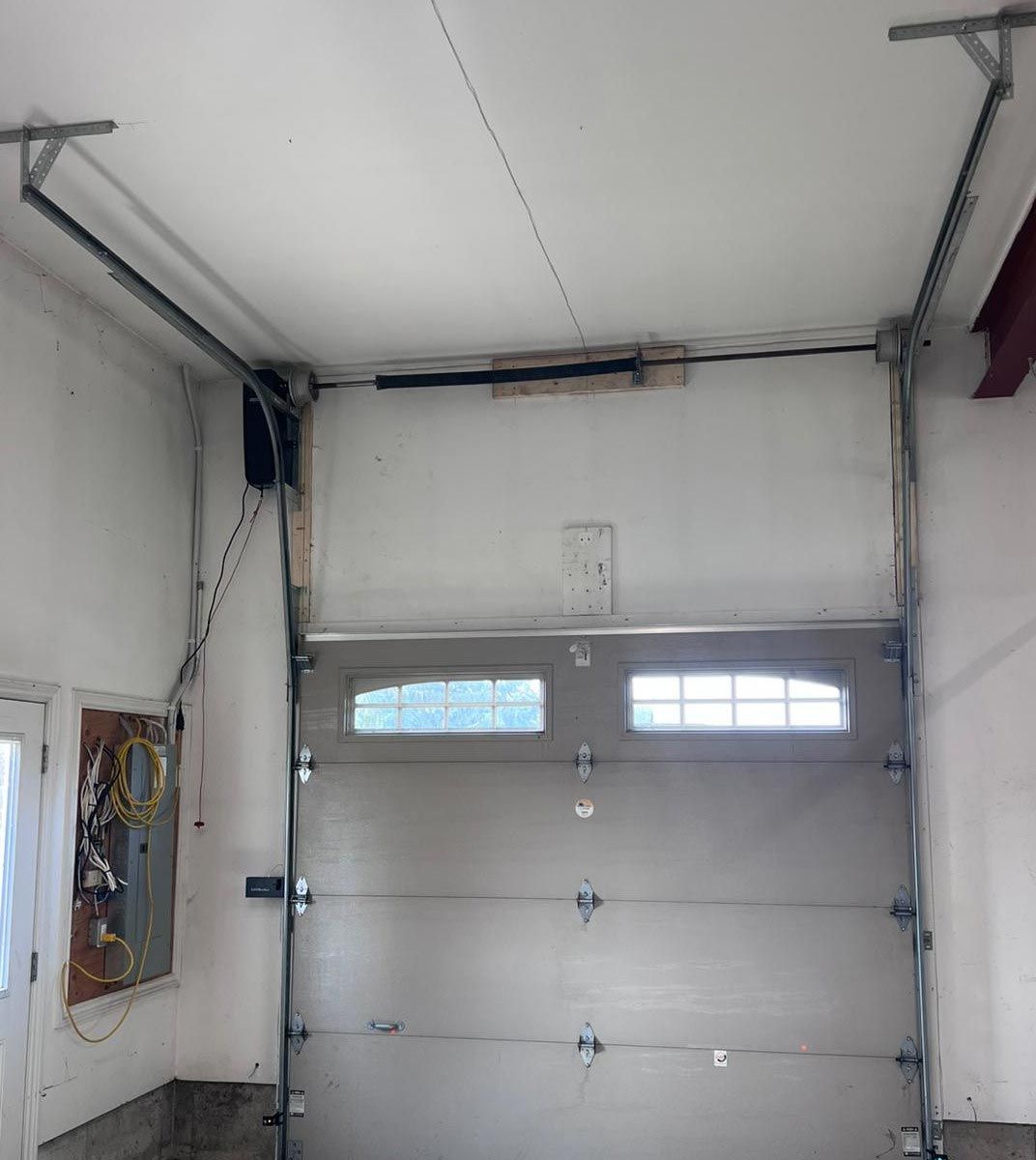
A change in door weight may call for different springs or other parts. Some insulated designs weigh more, so the new door must be checked as a complete system.
The springs help balance the door's weight. The opener moves a properly balanced door; a larger motor is not a fix for poor balance.
If the door shakes, binds, or moves unevenly, arrange garage door repair on Long Island before adding weight. Leave spring adjustments to a trained technician.
You do not always need a new opener with a new door. Joe's checks the existing unit and explains whether it can work with your chosen model. If it cannot, our team can discuss garage door opener replacement.
The recommendation should follow the door's needs and condition, rather than an automatic equipment upgrade.
Can You Add Insulation to an Existing Door?
Sometimes, yes, if the door maker allows it and the door is in good shape. HomeServe lists add-on insulation kits at about 50–200; that is a kit cost, not a full installed job.
Check with Joe's before adding material. DASMA warns that extra weight can affect balance, springs, hardware, and opener performance.
An add-on also will not fix worn seals, damaged panels, or failing parts. Ask what the full job would require before comparing it with a new factory-insulated door.
If the current door has several problems, a replacement may make more sense. If it is sound, a compatible add-on may be worth discussing.
What Happens When Joe's Installs Your Door?
Joe's starts with measurements and an inspection, then explains your options and price. You can choose with the full job in view.
- Measure and inspect. We take exact measurements and check the door balance, tracks, and springs.
- Explain the choices. We discuss your garage use, door construction, insulation, and finish.
- Give a written price. You see the cost before any work begins.
- Install and test. We install the door and matched parts, then check balance, travel, and safe operation.
- Clean up and review. We clean the work area and go over the door's use and warranty.
Joe's uses torsion springs rated for 20,000 or more cycles. One cycle means one full opening and closing of the door. Actual spring life depends on use and conditions.
Our certified technicians plan installations for local coastal conditions. Joe's also provides a written warranty and a satisfaction guarantee.
Where Does Joe's Work?
Joe's serves Long Island homeowners, mainly in Suffolk County. Our service areas include Huntington, NY; Smithtown; East Northport; Islip; Bay Shore; Babylon; Patchogue; Sayville; Ronkonkoma; Nesconset; Setauket; Oakdale; Centerport; and Bayport.
Frequently Asked Questions
Are insulated garage doors worth it on Long Island?
Often, yes, when your garage is attached, has a room above or beside it, or gets regular use as a workspace. The value is smaller for a detached, unheated parking garage. Compare the full installed price and check the walls, ceiling, and seals before you decide.
Do insulated garage doors really make a difference?
They can slow heat flow through the door and help improve comfort. Some designs may also reduce noise, though the result depends on the panels, seals, and hardware. Insulation does not heat the garage, fix a noisy opener, or guarantee a lower energy bill.
How much do insulated garage doors cost?
HomeServe, citing HomeGuide, lists installed ranges of about 750–1,900 for a single-car door and 1,500–3,700 for a two-car door. These are third-party estimates, not Joe's prices.
Your design, windows, hardware, and installation needs affect the quote. Joe's provides the exact price in writing before work starts.
What is the difference between insulated and non-insulated garage doors?
An insulated door has foam that slows heat flow through its panels. A non-insulated door lacks that foam layer.
Some insulated models also have an inner steel skin. Compare the complete designs, since strength, noise, weight, and price depend on more than whether the door contains insulation.
What R-value do I need for a garage door?
There is no single best R-value for every garage. Your use of the space, wall and ceiling insulation, seals, and heating needs all matter.
Use the ranges above as broad shopping guidance. Ask Joe's for the chosen model's rating and whether whole-door performance data is available.
Do I need new springs or an opener with an insulated garage door?
You may need different springs if the door's weight changes, but a new opener is not always needed. A technician should check the full system and the existing opener's fit and condition. The springs must balance the door correctly; opener power should not be used to hide a balance problem.
Does Joe's Garage Doors install insulated garage doors in Suffolk County?
Yes, Joe's installs residential doors for homeowners in Suffolk County and the Long Island service areas listed above. Our team can help you compare Gold, Platinum, and custom choices based on your garage and budget. Call (631) 320-5465 for a free quote and upfront pricing.
Ready to Compare Your Door Options?
Call Joe's Garage Doors at (631) 320-5465 or Get My Free Quote to compare a basic door with an insulated option. We're at 39 Melrose Ave, East Northport, NY 11731, and open 24 hours, 7 days, with emergency service available.