Quick Answer
Yes, you can usually keep your existing garage door opener when replacing the door if it runs smoothly, has working safety sensors, and suits the new door's weight and height. Age matters, but condition matters too. If it is worn out or lacks supported safety protection, garage door opener replacement is the better choice.
Not sure which applies? Call Joe's Garage Doors at (631) 320-5465 for a free quote with upfront pricing on both options.
Your door needs replacing, but the opener still works. Should you keep it, or does garage door opener replacement belong in the same estimate? You deserve a clear reason for either choice before you spend more.
This guide comes from the team at Joe's Garage Doors, serving Long Island since 2004. It draws on more than 20 years of local service experience and explains what matters for homeowners in Suffolk County.
When you replace your door, treat the door and opener as separate decisions. Joe's provides garage door opener installation in Long Island, so you can have the existing unit checked before choosing an upgrade and compare the work each option needs.
Can You Reuse Your Old Garage Door Opener With a New Door?
Usually, yes. You can keep it when its condition, safety features, capacity, and connection suit the replacement door.
These four conditions should all be met:
- It works reliably and is not showing serious wear.
- It has working photo-eye safety sensors and passes reversal testing.
- It has enough capacity for the new door and its opening height.
- It can be connected correctly, adjusted, and tested with the new door.
The springs counterbalance the door's weight; the opener moves that balanced door along its tracks. A stronger motor does not fix worn springs, binding rollers, or poor balance.
Joe's checks these parts before reconnecting an opener. If the door does not move freely by hand during a technician's inspection, the door problem needs attention first.
That may call for garage door repair in Long Island as part of the project. Once the new door is balanced and moves smoothly, the technician can judge whether your current opener remains a good fit.
How Long Does a Garage Door Opener Last?
A typical garage door opener lifespan is about 10–15 years, according to manufacturer guidance and HomeGuide. That range is a planning guide, not a deadline or a promise.
Your old garage door opener deserves closer inspection if you notice:
- Slower movement or jerky starts.
- New grinding, rattling, or strain.
- Controls that work only some of the time.
- Repeated repairs without lasting improvement.
Noise alone does not prove motor failure. The technician should check both opener and door hardware.
Manufacturer guidance also explains that some older controls use a fixed code set by switches. Newer rolling-code systems change the access code with each press, which is a useful security improvement.
Keep or Replace Your Garage Door Opener: Side-by-Side
Keeping a safe, compatible opener is often reasonable. Replacing it makes more sense when several problems overlap or the new door changes what the system needs.
| Factor | Keep your opener | Replace your opener |
|---|---|---|
| Age | Younger, with reliable operation | Older, with wear or recurring faults |
| Safety sensors | Working; reversal tests pass | Obsolete safety system or missing protection |
| Noise and performance | Smooth, with acceptable noise | Persistent strain, jerking, or motor noise |
| Remotes and security | Reliable, suitable controls | Unreliable or outdated fixed-code system |
| Features you want | Current features meet your needs | Quieter drive, backup power, or smart control |
| Door weight or height change | Compatible with the new door | Capacity or travel no longer suits it |
| Repair history | Few problems | Recurring faults or worn major parts |
| Upfront cost | Joe's quotes this on request | Joe's quotes this on request |
| Best for | A sound opener and similar door | A worn opener or changed setup |
What a New Garage Door Changes for Your Opener
When planning garage door installation in Long Island, remember that the new door can change the opener's workload and connection. Its balance, height, reinforcement, and hardware matter, even when the opening stays the same size.
The bracket connects the opener arm to the door. DASMA's industry guidance calls for suitable reinforcement and attachment, so a different top section may need a different connection.
| Door change | What it can mean for the opener | How Joe's handles it |
|---|---|---|
| Heavier door, such as insulated steel | Capacity and balance need checking | Inspects balance; matches opener to weight |
| Taller door or high lift | Existing travel or opener type may not suit | Checks setup; recalibrates or recommends an upgrade |
| Different top section or strut position | May need a different bracket or rail position | Inspects connection and mounting hardware |
| New tracks, rollers, and hinges | Old settings may not match movement | Adjusts travel and force; tests reversal |
| Similar size and weight | Reuse is often possible | Checks balance, reconnects, adjusts, and tests |
| Style or window change only | Little effect if weight and fit remain similar | Confirms actual weight and compatibility |
Will Your Opener Handle an Insulated or Heavier Door?
It depends on weight, balance, capacity, and the opener's condition. Horsepower alone cannot tell you whether an existing unit will suit the new door.
A 1/2 hp garage door opener and a 3/4 hp garage door opener are ratings you may encounter. Either needs checking against your actual door and the manufacturer's specifications.
Insulation can change the door's weight. Joe's offers insulated Gold doors and insulated sandwich-style Platinum doors, but the chosen door still needs an individual assessment.
A heavy duty garage door opener may suit a very heavy door. Joe's matches the replacement opener to your door's weight instead of applying a blanket horsepower rule.
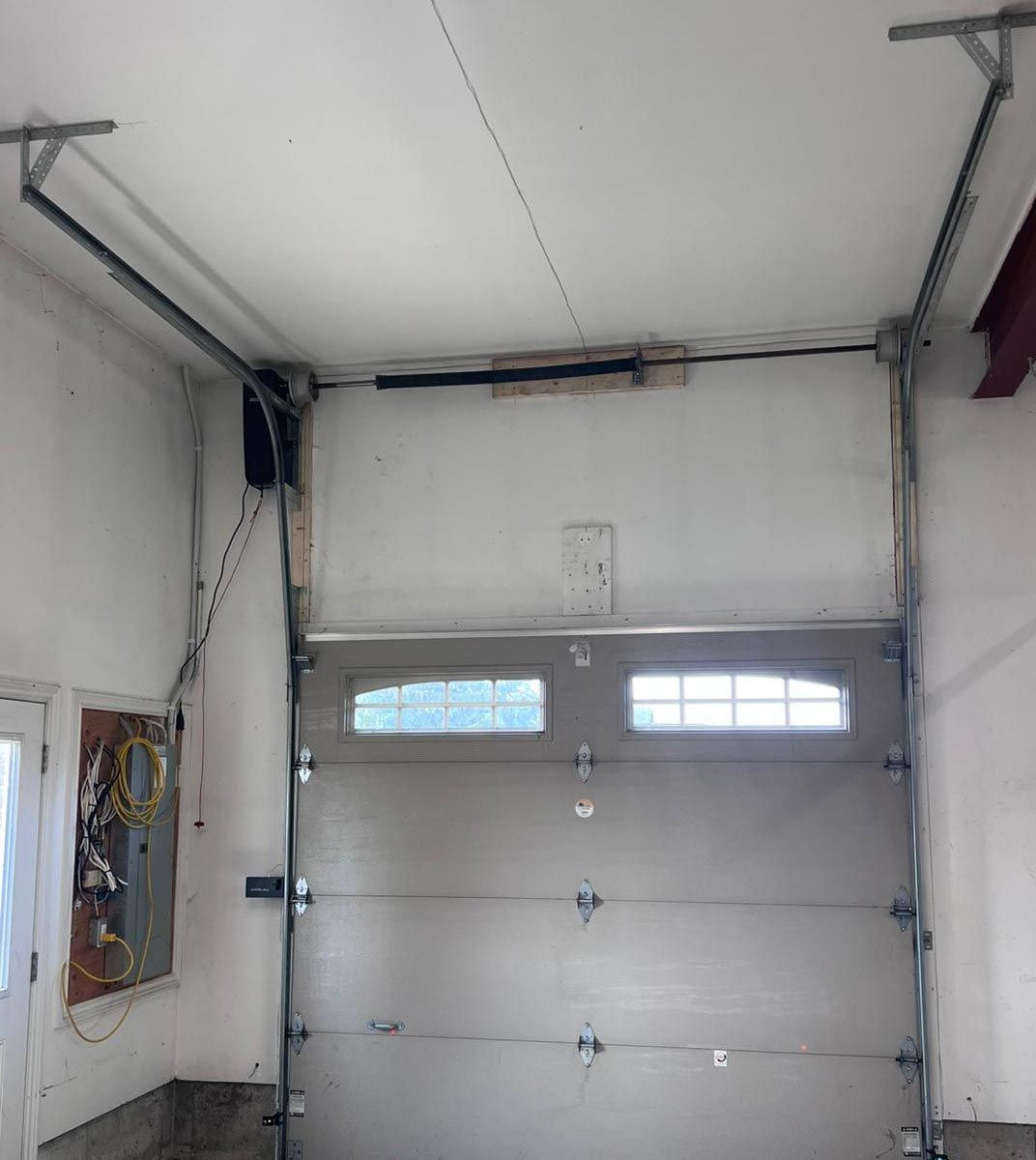
Planning a Taller or High Lift Door? You May Need a Jackshaft Garage Door Opener
A high lift setup can change whether your current opener is suitable. Joe's says standard openers often strain on high lift garage doors, so its team recalibrates suitable units or upgrades to jackshaft models designed for vertical pull. Joe's stocks jackshaft openers sized for high lift systems; the inspection determines the right choice for your garage.
Safety Sensors Are Not Optional
Working safety protection is a condition of keeping your opener. A garage door opener safety sensor helps detect an obstruction, while contact reversal provides another safety check.
The CPSC's safety rule added entrapment protection requirements for residential openers manufactured on or after January 1, 1993. Photo-eye sensors were one accepted option under that rule.
Before an opener is reused, its safety protection needs checking with the new door. Joe's places photo-eye sensors about six inches above the floor and tests their response during installation.
An obsolete opener that cannot support working safety protection should be replaced. If an otherwise serviceable unit has damaged or bypassed garage door opener sensors, leave it out of automatic use until a technician restores and tests its safety system.
Monthly reversal check
The CPSC recommends testing reversal monthly. With people and pets clear, follow your owner's manual and place a solid piece of 2x4 lumber flat in the door's path. Close the door; it should reverse when it touches the wood. If it does not, stop using automatic closing and call a technician.
Never increase closing force to make a binding door shut. Have the underlying door problem corrected first.
How Much Does Garage Door Opener Replacement Cost?
Your garage door opener replacement cost depends on the chosen unit, labor, hardware, and the existing setup.
The following are typical third-party estimates from HomeGuide's July 2025 cost guide, not Joe's prices. Joe's gives you an exact price in writing before any work begins.
| Item | Typical third-party estimate |
|---|---|
| Garage door opener installation cost, including unit | About 300–900 |
| Opener unit only | About 150–500 |
| Installation labor | About 150–400 |
| Chain-drive unit only | About 150–250 |
| Belt-drive unit only | About 200–450 |
| Screw-drive unit only | About 200–500 |
| Direct-drive unit only | About 300–500 |
| Safety sensors | About 25–100 |
| Keypad | About 20–70 |
| Remote, each | About 20–40 |
| Jackshaft installation | Joe's quotes this on inspection |
| Reconnecting and adjusting your existing opener | Joe's quotes this on request |
Do not add every row together; some items may already be included in the installed price. Keeping and retuning a sound opener is usually less expensive than replacement, provided it does not need substantial repairs; Joe's quotes this on request.
When comparing the cost to replace a garage door opener, check removal, hardware, safety testing, control setup, and written warranty terms. Each estimate should cover the same work.
Belt, Chain, or Screw Drive? Choosing a Replacement Opener
Choose a replacement garage door opener around fit and the features you will use. A belt vs chain garage door opener comparison usually comes down to noise and budget.
- Chain drive: A chain drive garage door opener is a traditional, generally lower-cost choice. It is usually louder than a belt drive.
- Belt drive: A belt drive garage door opener is worth considering when you want a quiet garage door opener, especially with living space above or beside the garage.
- Screw drive: This type uses a threaded rod. Ask whether it suits your door and available replacement choices.
- Connected controls: A smart garage door opener can offer app access and door-status checks. For a Wi-Fi garage door opener, confirm the available features and connection needs.
- Backup power: A garage door opener with battery backup can operate during an outage while the battery has charge. It is worth considering as you prepare your garage door for Long Island storm season.
Keep-or-Replace Scorecard
This scorecard helps you organize questions before inspection. It is a guide, not a diagnosis or a prediction of remaining life.
| Question | If yes, add |
|---|---|
| Is the opener over 12 years old? | +3 |
| Is it loud, jerky, or straining? | +2 |
| Are its controls unreliable or fixed-code? | +1 |
| Is the new door much heavier or taller? | +2 |
| Do you want backup power, quieter belt drive, or smart control? | +1 |
| Has it needed repairs in the last two years? | +1 |
| Is it under about 10 years old, quiet, with working sensors? | −3 |
- 0–2, or below zero: Keeping and retuning may be reasonable.
- 3–5: Ask for both options in writing.
- 6 or more: Replacement is likely worth closer consideration.
An obsolete opener without supported safety protection needs replacement, whatever the score. A failed sensor on a newer, repairable unit needs diagnosis before you decide.
Bring your score to the appointment, but base the final decision on the inspection findings.
When Does Keeping or Replacing Make More Sense?
Keeping makes sense when the opener remains safe and compatible; replacement makes sense when inspection finds wear, missing safety protection, or a poor fit. These two paths show what your estimate should address.
Keeping and Retuning a Sound Opener
If your current opener is quiet, reliable, and equipped with working sensors, reuse deserves consideration. A replacement door with similar dimensions and weight may allow that, provided the inspection confirms compatible mounting and capacity.
Keeping the unit is reasonable if it passes the final tests. The work includes checking balance and connections, adjusting settings, and testing both safety systems.
Your estimate should explain the reconnection work and any hardware needed. A new door alone is not a reason to discard a sound opener.
Replacing a Worn Opener With the Door
Recurring faults, strain, and a change in door weight or lift setup make replacement worth comparing. First, the technician needs to confirm whether the strain comes from the door or the opener.
A new garage door opener may make sense if the existing unit is worn or unsuitable. Joe's can match the unit to the new door, replace worn mounting hardware, and test the completed system.
Your estimate should explain why replacing garage door opener equipment is recommended. Ask what a repair would solve and what problems would remain.
What Happens to Your Opener on Installation Day?
Joe's starts with the existing door system before deciding what the opener needs. When a new ceiling-mounted unit is required, the installation follows these steps.
- Inspect the setup. Your technician checks balance, tracks, and springs. The door must move freely by hand before the motor is asked to move it.
- Secure the motor. The unit is mounted level, with heavy-duty fasteners into the ceiling joists. Its supports are checked rather than assumed suitable.
- Install and test sensors. Safety sensors are wired and positioned about six inches above the floor. Their response is tested twice.
- Connect and set up controls. Joe's connects power, syncs remotes, keypads, and car buttons, and connects smart models to Wi-Fi and the phone app.
- Run and adjust the system. The technician cycles the door several times and adjusts torque, travel limits, and reversal settings for the completed setup.
For replacement, Joe's also removes the old unit, inspects mounting rails, replaces worn hardware, and registers the warranty. Your controls and the finished system are tested before the work is complete.
If you keep your opener, its connection, settings, and safety response still need checking with the new door.
When Your Opener Needs Repair, Not Replacement
Garage door opener repair may be the better choice when a newer, otherwise sound unit has one failed part. Compare that repair with the unit's overall condition.
Joe's handles:
- Motor burnout and circuit board faults.
- Travel-limit problems.
- Chain and belt trouble.
- Dirty, misaligned, or failed sensors.
- Control programming and smart connection setup.
If your garage door opener is not working when you try to close it, look for an obstruction at the sensors first. With the door stationary, gently clean dirty lenses and check whether the sensors face each other; leave damaged brackets or wiring to the technician.
For warning sounds, read why your garage door opener is beeping. For diagnosis and service, arrange garage door opener repair in Long Island.
Where We Work
Joe's is a locally owned Long Island garage door company serving homeowners mainly in Suffolk County, including Huntington, NY, Smithtown, East Northport, Islip, Bay Shore, Babylon, Patchogue, Sayville, Ronkonkoma, Nesconset, Setauket, Oakdale, Centerport, and Bayport.
Frequently Asked Questions
Can I keep my old garage door opener with a new garage door?
Yes, if it is safe, in good condition, and compatible with the new door's weight, height, and mounting requirements. The door must be balanced first, then the opener must be connected, adjusted, and tested. A similar door replacement often allows reuse, but inspection should confirm that.
How long does a garage door opener last?
Typically, about 10–15 years, according to manufacturer guidance and HomeGuide. The actual lifespan in your home depends on use, upkeep, and the door's balance. Treat age as a reason to inspect the unit, while considering noise, reliability, safety features, and repair history.
Will my existing opener lift a heavier or insulated garage door?
It may, if its rated capacity suits the new door and the door is correctly balanced. Extra weight does not automatically require a new motor, but it does require checking the spring setup and opener specifications. Joe's assesses the actual door and unit before recommending whether to keep or replace it.
What hp garage door opener do I need?
You need the capacity specified for your actual door, not a horsepower choice based on appearance alone. Door weight, balance, height, and opener design all affect suitability. Joe's checks the setup and matches the unit to the door's weight, rather than giving a blanket horsepower rule for every home.
How much does it cost to replace a garage door opener?
HomeGuide's typical installed range is about 300–900, including the unit and installation. That is a national third-party estimate, not Joe's price or a guaranteed local range. Joe's quotes your specific setup in writing before work begins, including any needed hardware, safety checks, and the selected opener's features.
Do I need a jackshaft garage door opener for a high lift door?
Not always; the right choice depends on the high lift setup and whether your current opener can be adapted. Joe's says standard units can strain on these systems, so its team recalibrates suitable equipment or recommends a jackshaft model designed for vertical pull. An inspection determines which option fits.
Does Joe's Garage Doors install and replace garage door openers on Long Island?
Yes, Joe's provides opener installation, repair, programming, and replacement for Long Island homeowners. Its certified, factory-trained technicians service all brands and give upfront pricing before work starts. Stocked trucks help the team complete most jobs the same day, and emergency service is available around the clock.
Get a Clear Keep-or-Replace Recommendation
If you are weighing garage door opener replacement on Long Island, Joe's certified, factory-trained team can inspect the setup and explain both options with upfront pricing, a written warranty, and a satisfaction guarantee. Call (631) 320-5465 or Get My Free Quote. Joe's Garage Doors is at 39 Melrose Ave, East Northport, NY 11731, and is open 24 hours, 7 days a week.
Written by the Joe's Garage Doors team. Published October 2026. Last updated October 2026.